THIS REVIEW WAS SENT BY AMY, A STUDENT AT LEICESTER GRAMMAR SCHOOL IN SEPTEMBER 2013
A book review by Ami Ganatra, Year 9D
Whilst the author compares his book to a patchwork', Tea Love and War' is more a tapestry of literature in my opinion; a mycelium of threads expertly woven together to form a dramatic epic novel. The book provides a very interesting outlook on much of 20th century life with particular focus on World War 2; the author David Mitchell through his mother Mary, explores the rich and remarkable history of his family life, in places ranging from India to Malaya to England.
Initially, the story begins with loose threads. Fragments of an Anglo-Indian girl's life at a convent school are introduced in the first couple of chapters. This gives the reader something to bear in the mind whilst the core of the first book narrates the stories of Stuart and his sister Mary Poyser. They both voice their experiences as Stuart travels to work on a tea estate in India and England braces itself for war. Whilst Stuart finds himself falling in love with an Indian teenager on one hand, he is diligently managing busy tea factories on the other. Mary becomes a devoted sports enthusiast in England and gains more senior sporting positions as her life goes on. From the start, both their stories are fascinating and engage the reader immediately. As war erupts, the story becomes more turbulent both in England and abroad and one is shown a more personal side to life then. Love lives are turned around, as the war spreads; just as war subsides in one part of the world, it begins to gain pace in another. As the years pass, life goes on and almost every page of the book continues to captivate the already engrossed reader.
Thereafter, the story develops further. New characters come to the forefront, the story now being looked at from their eyes. The author's powerful writing style frequently evokes the reader's more emotional side; no sooner is the reader crying with sympathy at the moving climaxes than they are cringing with nausea at the gory descriptions.
All in all, by the story's conclusion, the loose threads throughout the book eventually intertwine harmoniously, coming together for a deeply satisfying and happy ending.
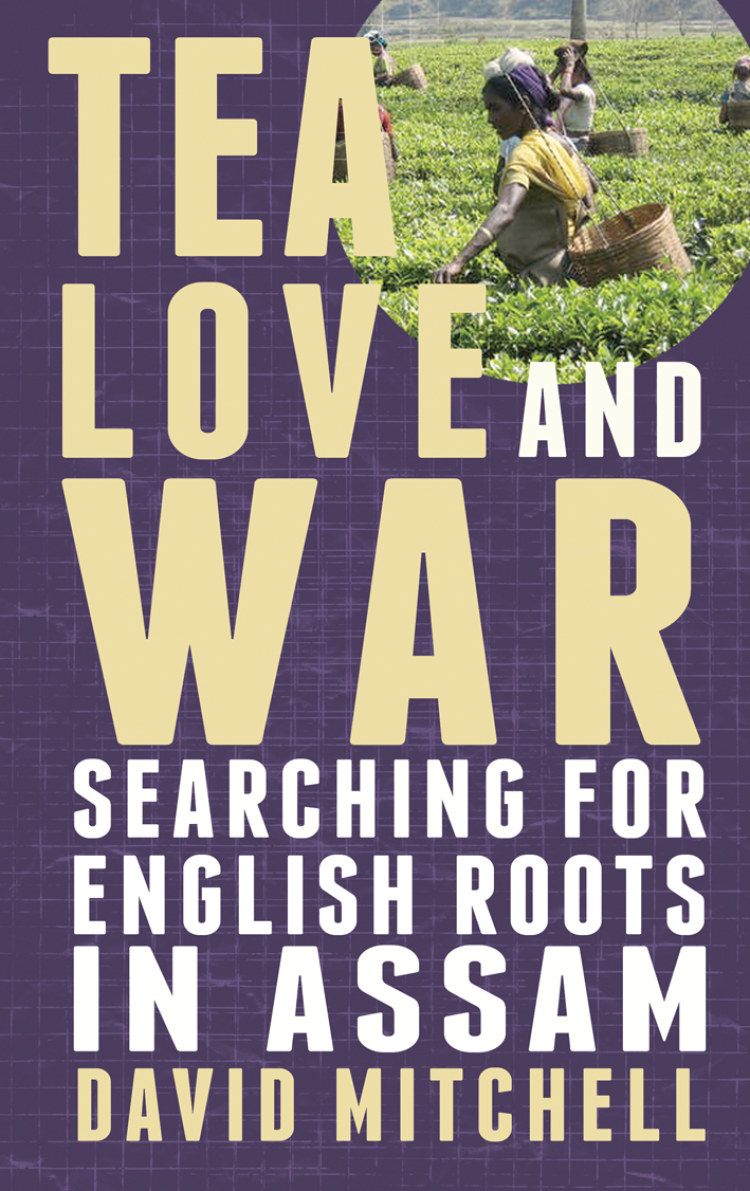
The art of putting together such an in-depth true story, and relating it in such an eloquent manner is in itself admirable. I thoroughly enjoyed reading the novel, and found that there are many messages I could take away from it. Firstly, that life goes on inexorably. The characters contend with the many problems they faced, and one must apply that to life today. The other is that one must not give up easily. I quote from the front cover, Searching for English Roots in Assam'; this is the quest in the book that took an entire lifetime, but still was never given up.
The universality of the novel means it can appeal to nearly all ages and both genders, and can give one a real insight into life in the heart of the 20th century. I believe that David Mitchell has crafted a truly brilliant book, which has shown me a very different perspective on a period that I have read numerous books about. This book is also extra personal to me in that it features my home city, Leicester I feel I cannot pass by Morland Avenue again without mentally exclaiming "That was in Tea Love and War!'
In all, I heartily recommend Tea Love and War' by David Mitchell.