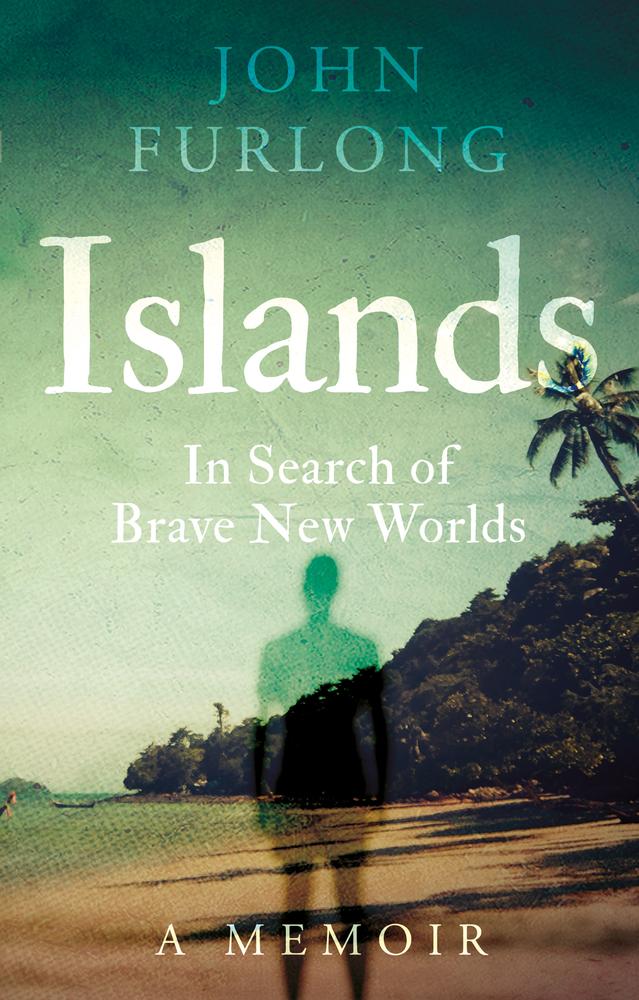
Autobiography
What begins as a youthful search for freedom becomes a journey into the hidden realities of history, revolution, and identity.
In the summer of 1969, John Furlong leaves behind the noise and chaos of Manhattan in search of something more meaningful. America is changing fast — the anti-war movement, civil rights protests, feminism, meditation, drugs and counterculture are reshaping an entire generation. But beneath the excitement of this “brave new world,” John feels increasingly disconnected and restless.
Drawn by the promise of simplicity and escape, he and his friend Mike travel through the Caribbean, discovering islands untouched by mass tourism and modern excess. Yet paradise reveals another story — one shaped by centuries of colonialism, slavery, poverty, and political unrest left behind by the fading British Empire.
Everything changes on the tiny island of Carriacou when John meets Father Pat, a charismatic and deeply controversial priest determined to build a fairer society. Inspired by his vision, John is pulled into a world far more complex than he ever imagined.
But who was Father Pat really?
Now, fifty years later, John uncovers the truth about the man who would become connected to Grenada’s revolutionary movement of 1979 and its ambitious attempt to create a new society before it all came crashing down.
Part memoir, part historical journey, and part political awakening, Islands: In Search of Brave New Worlds is a powerful reflection on idealism, colonial legacy, revolution, and the lifelong search for meaning in a rapidly changing world.
Here's what readers have to say about this book....
A book I enjoyed reading:interesting and informative; particularly the observations regarding the legacy of British Colonial rule in the Caribbean. The story revisits a singular period in youth culture in the 1960s. Mr.Furlong captures something of the spirit of the times when many young people questioned the establishment order and viewed their future with hope and optimism.
A very engrossing and thought provoking read. Travel back to 1969 in New York and then onto island hopping in the Caribbean. A history book wrapped in a coming of age book. Difficult to put down and a pleasure to read.
Last week I was sent a review copy of "Islands by John Furlong. It is an unusual example of adventurous story-telling. It's very readable and well-crafted. A somewhat bold and brave book. I was intrigued, and wanted to know more. I could see that, although John had published twenty well-received books about education, this was his first non-academic book. To learn more of the inside story I rang up to ask him some questions. What inspired you to tell this story? JF. I might be wrong but I thought that not many people had ever written about what today is called the gap year experience. I had the idea that it would be really interesting to explore and share my memories of how, during my travels, I came to discover what my values really are, and how I came to decide upon what I wanted to do with my life. Were there other writers who influenced you? JF. Well obviously, there were classics like Jack Kerouac's On the Road' and Laurie Lee's As I Walked Out One Spring Morning'. But of recent books, I thought Raynor Wynn in "The Salt Path was very powerful. I liked the way she combined the story of her journey with references to the issue of homelessness. I wanted to do something like that. If "Islands has a minor flaw it is maybe that it ambitiously tackles a number of different issues? JF. I can only respond by saying that the brutality of the slave trade was, and is, the one top issue that I want the reader to engage with the most. It is so often an issue people dodge! Do you think that the story you vividly tell - about life in 1969 in America and throughout the Caribbean - resonates still today, fifty years later? JF. Last night on Channel Four there was an extended feature about slavery and the way it created vast wealth that European countries like our own are still benefiting from to this day. The poverty we witnessed in 1969 has largely remained unchanged. Mass Caribbean tourism hasn't brought much prosperity to islanders over there. The issue from now on is all about reparations. An ex-BBC journalist was interviewed. She is investing £100,000 (the lump sum attached to her pension) in programmes of education on Grenada - where sugar is still a major blight on health. I was very impressed. It is the potential power of education that has been my lifelong passion. Was there an impact that you yourself could have achieved back then? JF. Well of course not! As I say in the Prologue; "we were nothing more than tourists - naïve kids skimming over the surface of major political and social changes. What ambition do you have for the book now it is published? JF. I would love it to reach a much wider audience than my family, friends and close colleagues. Book club groups, I think, would enjoy discussing it. And those large luxury Caribbean cruise ships - I am guessing they all have well-stocked bookshops onboard! When you enjoy Christmas in Carriacou you reflect on the many condescending characters you met on your travels; all "playing the public school card. You've spent years as an Oxbridge academic, do you really hold with this view? JF. Not completely. To be fair, many of my close friends like Mike were privately educated. It's simply the colonial attitudes we encountered on our travels that shocked me. I just re-read Alan Bennett's famous 2014 lecture about how wrong public schooling is and how many people know that it's wrong. What is clear is that an unfair education system does little to address the yawning gaps between poverty and affluence in society. Finally, I did laugh because there are a few things that didn't work out for you. You didn't get to Woodstock; set foot on South American soil; produce a newspaper for Father Pat (despite the training!). You even confess to a lack of real progress in your understanding of women! JF. You've got me there! Guess we all have contradictions. But I'll give you this. I can see why you describe me as being somewhat "brave and bold - so - thank you. I'm glad you enjoyed reading my memoir. Dick Chamberlain Arts & Education Projects Manager Thame, Oxfordshire.
Exceptionally well crafted - very readable - highly recommended - great book.
Get the latest Troubador articles, news and events sent directly to your inbox.