Young adult
Find this ebook at your favourite retailer below:
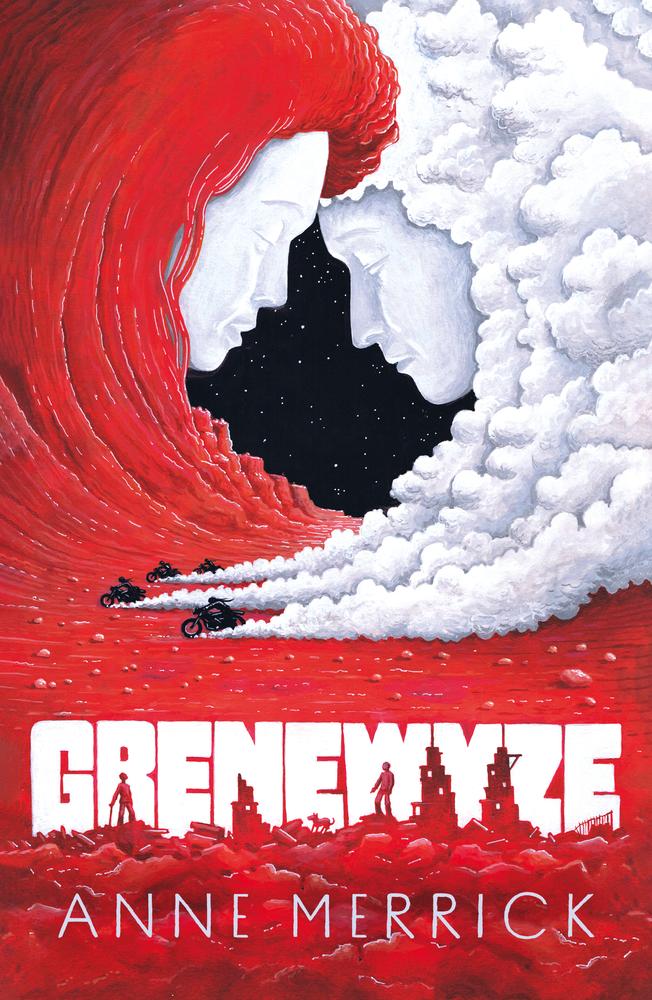
When a mysteriously carved walking stick arrives without explanation – bearing only the word Grenewyze – Flora sets out across a lawless, devastated land hoping to uncover its meaning and find the father who vanished long ago. Accompanied by her dying mother, and later joined by a stray dog, an abandoned baby, a homeless woman, and a young musician on a quest of his own, Flora’s journey leads her through perilous territory ruled by brutal Warlords and in constant fear of beast-like Outlanders.
Having escaped the repressive island community led by his father, Silver seeks freedom and a life in the wider world. Drawn briefly into the company of a travelling Circus whose work seeks to preserve echoes of a lost civilisation, he finds himself swept into the same dangerous quest.
As winter tightens its grip and their enemies close in, the travellers take refuge in a forbidden mountain stronghold. There the ensuing clash between the Warlords and the Circus brings about a finale that none of them could have imagined – and they discover the secret of Grenewyze, a secret that could restore hope to them and their shattered world.
Here's what readers have to say about this book....
Get the latest Troubador articles, news and events sent directly to your inbox.
In Grenewyze as in her earlier works, Anne Merrick writes from a deep understanding of children and young people. Once again a hallmark of this novel is her imaginative creation of character as the protagonists move and develop their understandings of primal life forces. Birth, growth, love, death are all a part of the rich texture of this work, as they have been previously; but whereas Someone Came Knocking (Puffin,1994, shortlisted for the Carnegie Medal) and The Snow Globe (Spindlewood 2001) take the child's imagination as prime motivator in the narrative, here in Grenewyze the environment in which the characters move is what threatens and disturbs. Grenewyze looks into the future; written perhaps for an older, less innocent readership, it explores a post-apocalyptic world in which what is left of society has polarized into groups (The Warlords and the Island) and become highly threatening. The journeys undertaken in the earlier novels were often derived from the imaginations of the child. In Grenewyze, the protagonists travel through a countryside ravaged by an unspecified but all-too-real apolcalypse. Merrick conveys vividly the loss, death, destruction of an apocalyptic catastrophe, but she does this indirectly by referencing a pre-lapsarian context of folk tale and the mythic. Echoes of harmony, glimpses of greenness suggest what has been lost, but we never know what the catastrophe was or how it happened, and the story is all the more powerful for this. The novel is beautifully written, and the eye for detail and strength of vision make for insights which are sometimes achingly nostalgic. The characters are varied and fascinating; here, too, Merrick's keen ear for language conveys inner landscapes which are arguably as important to the reader as the terrain these people confront. The chief protagonists are memorable; I became fond of them and found it hard to leave them at the end. That, in my book, is a very big complement. A rich, and richly enjoyable, work. More, please!