


History, Politics & Society
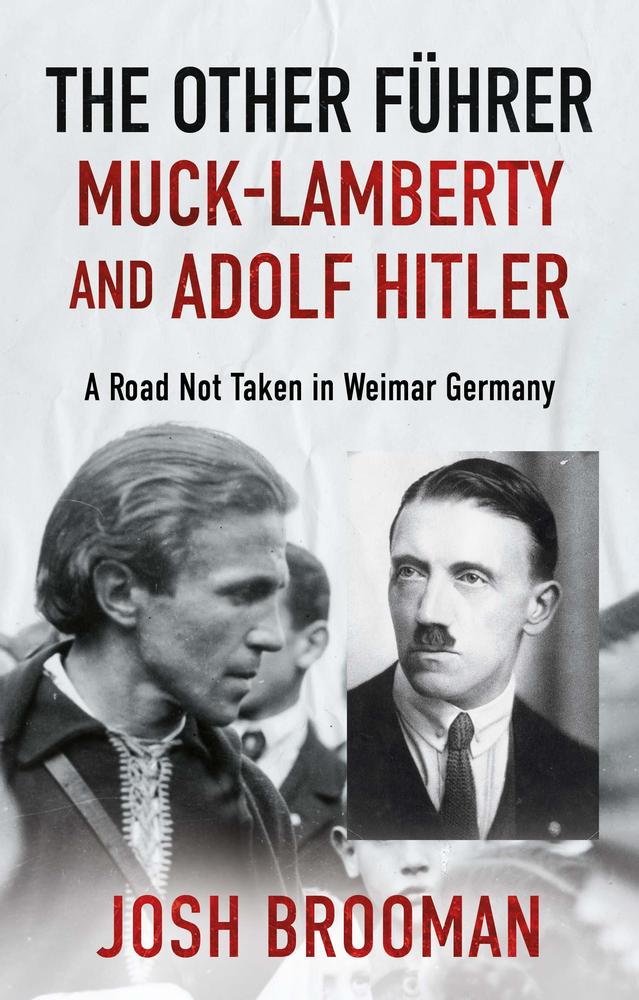
The Other Führer: Muck-Lamberty and Adolf Hitler
A Road Not Taken in Weimar Germany
by Josh Brooman
- ISBN:
- 9781806340644
- eISBN:
- 9781806345229
Paperback
£12.99
Synopsis
Germany 1920. A new political movement is born. It is led by a charismatic ex-serviceman whose aim is to create a ‘National Community’ in the war-devastated country. His followers call him ‘Führer.’
But this is not Adolf Hitler. His name is Friedrich Lamberty, better known as Muck, and his methods are very different from Hitler’s. He and his followers, who call themselves the New Crowd, trek through the centre of Germany singing, dancing and playing with local people. By the end of 1920 they have brought hundreds of thousands of people out of their homes to join in a ‘revolution of the soul.’ But then an unexpected and shocking development causes the New Crowd to break up. Muck disappears from the scene as quickly as he arrived.
The story of Muck-Lamberty’s rise and fall, told here for the first time in English, throws new light on Germany in the early twentieth century. It examines the country’s unique youth movement, the impact on young people of world war and revolution, the strange post-war dance craze, the revolution in sexual behaviour, and the development of new ways of thinking about what it meant to be German - and Jewish.
In each of these areas, Muck-Lamberty is compared with Adolf Hitler to find out why he was initially more successful than the Nazi leader, but then failed to establish himself as a ‘Führer.’
Also available as
RRP £6.99




No reviews yet. Be the first to write a review
