





History, Politics & Society
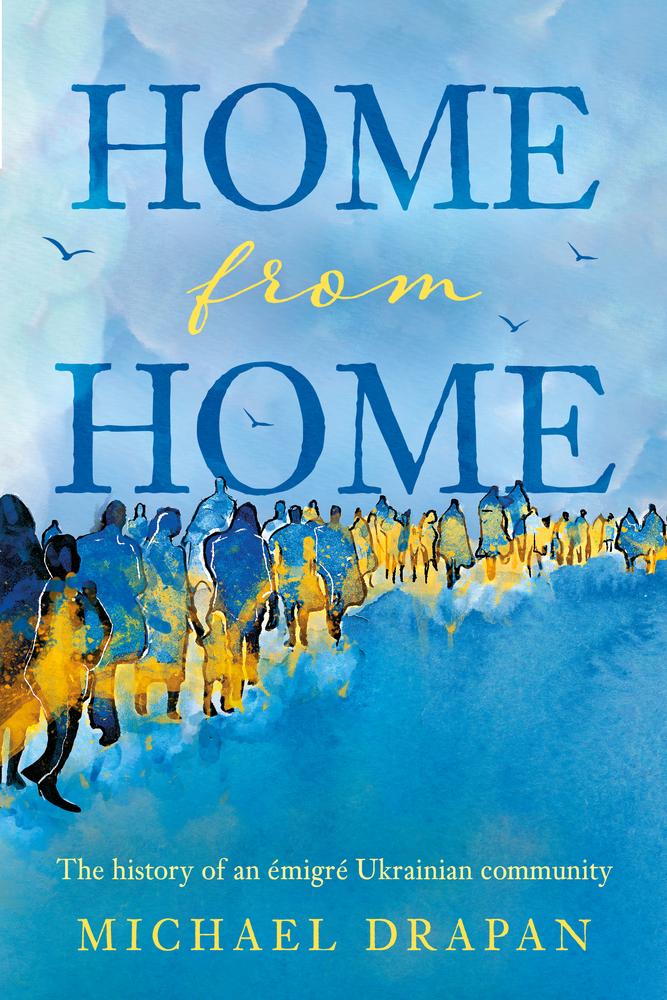
Home from Home records the seventy-year history of an emigree Ukrainian community which established roots and gradually integrated into the life of a Yorkshire mill town, while nurturing deep ties with its homeland. By sharing its relatively unknown past, specifically at a time when Ukraine heroically endures an unprovoked and destructive invasion by Russian forces, it aids understanding of historic hostilities between the two.
Initially covering harrowing, sensitive and hitherto undisclosed stories, Home from Home travels back to a traumatic era of enforced slave labour under the Third Reich, battles on the Eastern Front and survival in frightful camps during the bloody years of the Second World War.
Then, from the late 1940s, the establishment of Ukrainian Clubs, like Huddersfield, enable the preservation of Ukrainian history, language, and traditions in the UK. Rich, vibrant Christmas and Easter traditions, Ukrainians’ love of music, dance, food and drink come to the fore; and yet in the background, the clamour for Ukrainian Independence endured and still shines brightly to this day.
Home from Home provides a deep, empathetic view of Ukrainians settling in the UK, their past and current difficulties integrating, and their legendary resilience to overcome and survive as a free and proud people.
Here's what readers have to say about this book....
An awesome read! Eye opening, thought provoking and insightful. Highly recommended!
The first three chapters of the book detail how and why Ukrainian immigrants came to the UK after WWII. Their experiences may be similar to other immigrant communities making their home in a foreign country. What is original and unique in the following chapters, is the description of the collective spirit of displaced people overcoming adversity, clearly and informatively presented using personal stories and experiences from residents who have established a flourishing Ukrainian community in Huddersfield, West Yorkshire. The book also shows how the skills and relationships forged in displaced persons camps post WWII in Germany, Austria and eventually camps in the UK came to help develop a thriving community. These skills, sheer hard work, self sacrifice and determination played a pivotal role in establishing the spiritual, educational and cultural activities within a physical community building in Huddersfield. As in many communities, any group rivalries in terms of ideological, religious and social disagreements highlighted in the book were analysed and sensitively addressed. Examples are given of how the desire to integrate with the local and wider communities throughout Yorkshire and beyond is still practiced to the present day. Could their experiences be a blueprint of how people from a different country can settle and integrate into a community, at the same time keeping their historical identity alive? Some of the old blurry photographs in the Appendices of people and places add to the mystery of a people who subsequently ‘rocked up’ to the UK with just a suitcase of possessions to make a ‘home from home’ in Huddersfield. The book is another chapter of British history documenting a communal history and testimony of those who helped develop and continue to maintain the future of a Ukrainian community in Huddersfield.
When my Ukrainian father died in my seventh year, a lot of the questions I asked him and later wished to ask remained unanswered. A great many of the gaps in my knowledge and understanding of the community I grew up in have been addressed by Home from Home, Michael Drapan’s book on The History of an Emigre Ukrainian Community. Wonderfully written and researched, it spans the roots of the West Yorkshire based Ukrainian diaspora and its development and integration into English society, whilst maintaining strong Ukrainian cultural links. It manages to weave a story of a small West Yorkshire based community with the wider expanse of Ukrainian history, political turmoil and cultural traditions, and thus should appeal to readers interested in Ukraine and its people. Anyone who doubts the merits of multiculturalism should read this book!
Get the latest Troubador articles, news and events sent directly to your inbox.