


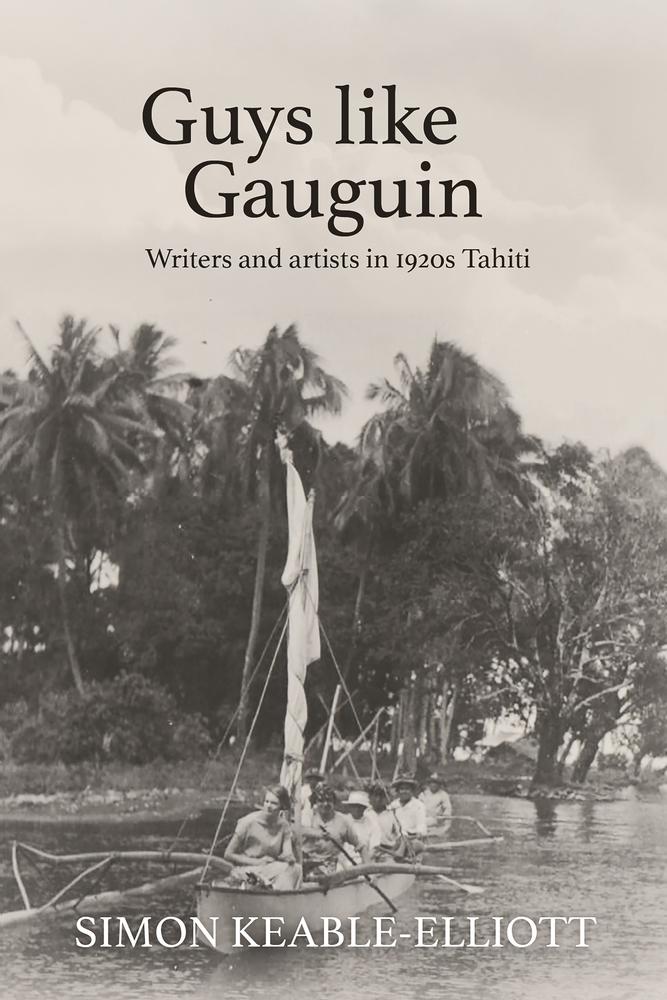




Karen McMillan, NZ Book Lovers
What a fascinating book! Author Simon Keable-Elliott examines the lives of European and American writers and artists who arrived in Tahiti in the 1920s. This was less than 20 years after Paul Gauguin's death, when a Tahiti craze swept the world, and it was seen as a picture-postcard paradise island, though the reality was more complicated and nuanced. The author has a personal interest in writing this book. His grandfather, Robert Keable, moved to live in Tahiti in 1922. He was inspired by Robert Louis Stevenson and Paul Gauguin, and even rented the half-wrecked shack that Gauguin had lived in. The author’s aim was to uncover the truth about the various English-speaking writers and artists who were attracted to Tahiti at this time. Why they went there and what their experiences were like for both their lives and their creative work. It’s quite a roll call of famous people, including painters such as George Biddle, Jerome Blum, William Alister Macdonald and Viscount Jack Hastings, as well as adventurer Dean Frisbie, Zane Grey, Alec Waugh and Mutiny on the Bounty’s Nordhoff and Hall. This is a well-written, well-researched nonfiction work with the excitement of a novel. The characters and setting are incredible, and it's a riveting read from start to finish, capturing a particular time in history with panache.
