





Contemporary
Here's what readers have to say about this book....
A Novel That Opened an Unfamiliar Dialogue My Review of The Bastard Club: Love in the Time of Sex Wars I approached The Bastard Club: Love in the Time of Sex Wars expecting provocation, perhaps even controversy. What I did not expect was how quietly the novel would draw me in, or how much it would make me reflect on ideas that felt unfamiliar yet revealing. This is not a book that lectures or performs outrage; it unfolds slowly, allowing its ideas to speak for themselves. Coming from a Middle Eastern background, many of the book’s themes were new to me, not because they are extreme, but because discussions around sex, masculinity, and feminist theory are still limited, fragmented, or culturally filtered in much of the region. The novel gave me a vocabulary and a framework I had not previously encountered in fiction, particularly in how ideological debates enter private emotional lives. For that reason alone, I found the book worthy of translation and circulation beyond its original cultural setting. The character of Patrick is compelling not because he is admirable, but because he is recognisable. His attraction to the Bastard Club is driven less by hostility than by uncertainty. What the club offers him is structure: explanations where there were doubts, confidence where there was hesitation. Reading this, I became aware of how seductive intellectual certainty can be when emotional vulnerability feels unsafe. What stayed with me most is how the novel captures performance masquerading as authenticity. The men in the club believe they are learning how to be themselves, yet they are constantly rehearsing, monitoring, and adjusting. That contradiction is portrayed with restraint and precision. Patrick seems to gain control while losing presence, and that tension gives the story its quiet power. The central relationship does not function as a solution or moral resolution. Instead, it exposes the limits of theory when confronted with genuine human connection. Love, in this novel, is disruptive rather than comforting. It resists categorisation, and in doing so reveals how exhausting constant strategy can be. I finished The Bastard Club feeling that it is not really a novel about sex wars, but about fear—fear of ambiguity, of rejection, of being emotionally unarmed. For readers like me, from cultures where these conversations are still emerging or unevenly represented, the book feels not only relevant but necessary. It opens a space for dialogue that has yet to be fully translated, both linguistically and culturally, and that is what makes it linger in the mind long after the final page. I would recommend this book to readers who are interested in contemporary social debates, psychological realism, and fiction that challenges cultural assumptions rather than confirming them.
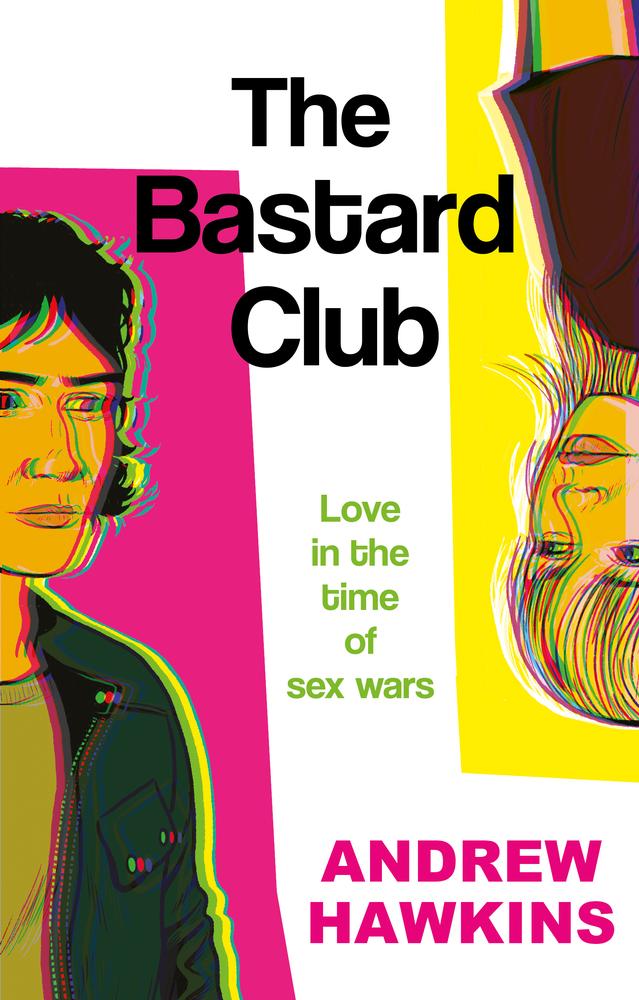
This book is a seriously – and comically – good read! Although it’s set in the early noughties, it doesn’t feel dated at all, except for the references to CD Roms, which made me feel quite nostalgic. But the main theme – ‘male resurgence’/toxic masculinity/what it means to be a man in today’s world – is still very much alive and kicking. Skilfully, what could be a heavy topic is handled with a light, extremely humorous touch, not just in the description of the different situations and characters, but above all when beautifully replicating the analytical thought processes of the main character and the messes he gets himself into and out of, and into… I found myself laughing out loud on several occasions, especially due to the author’s subtle and witty use of language. The book has all the elements of a best-seller – credible and gripping plot, several interweaving storylines, a strong romantic theme and a certain moral edginess. I found myself missing my evening read of it when I’d finished. And one last thing: if you read it on the train you may raise a few eyebrows by the shouty title itself and the striking yellow-pink-black colouring of the cover.
This is a terrific book - such a satisfying development of characters struggling to understand themselves and their motivations as they work through conflicted relationships and the wreckage of past affairs. The false but tempting promises of male self-assertion are explored with care, and the romance plot that drives it is full of twists. The writing is skillful and pleasurable. The whole thing achieves so much more depth than is customary or required in contemporary fiction.
Known a few bastards in your time? Want to find out the secret rules they play by? Then 'THE BASTARD CLUB' is for you. In this deliciously ironic take on gender politics, Andrew Hawkins introduces us to The Institute aka The Bastard Club, a conscience-lobotomising training programme designed to shore up fragile masculine egos, run by the charismatic snake oil salesman, Al Eschler. With its echoes of EST and Al's name very close to another past master of paths that lead nowhere, alarm bells should be ringing for systems analyst, Patrick, a man devastated after his recent break-up with wild child, Cynthia. But neither the spurious initiations and Iron Man weekend retreats at £2k a pop (you need wealth to be an Eschler bastard) nor the misogynistic rules of the club, designed to circumvent falling in love, alert him. It is only when he meets Lillian, whose humanity challenges the objectivising stereotypes the Bastard Club believes in, that he sees the need to subvert the subversive Eschler ideology and break free. Patrick finally declares his love - but it is Lillian who will have the last word... A witty, intelligent debut novel from a writer who looks at the world with an admirably level gaze - and who skewers our expectations on every page. Highly recommended.
Under the leadership of the charismatic Dr Al Eschler, a backlash is being spearheaded against advancing third wave Feminism, in the heart of millennial London. Patrick, a computer systems analyst with his own store of relationship troubles, falls under the influence, and joins the Institute, aka the Bastard Club.
Despite Patrick’s intellectual gifts, even his native scepticism gets worked loose under the glare of Bastard Theory and the mind-warping rigours of the training. His class at the Institute presents an eclectic mix of men’s issues and neuroses, as they battle through strategies, complex and subtle systems of manipulation, Zen arts of chatting up and reporting in.
The American, the ‘Boss’, has the mission and the method. Except Patrick has met and is in pursuit of Lillian, a bright and utterly desirable broadsheet journalist, on whom he must practise and develop his Bastard skills. As his interest in her becomes more compelling, straying even into the ‘heresy’ of love, it becomes increasingly unlikely that this affair, and all that’s riding on it, can work out well…
Get the latest Troubador articles, news and events sent directly to your inbox.