






Darla Rice
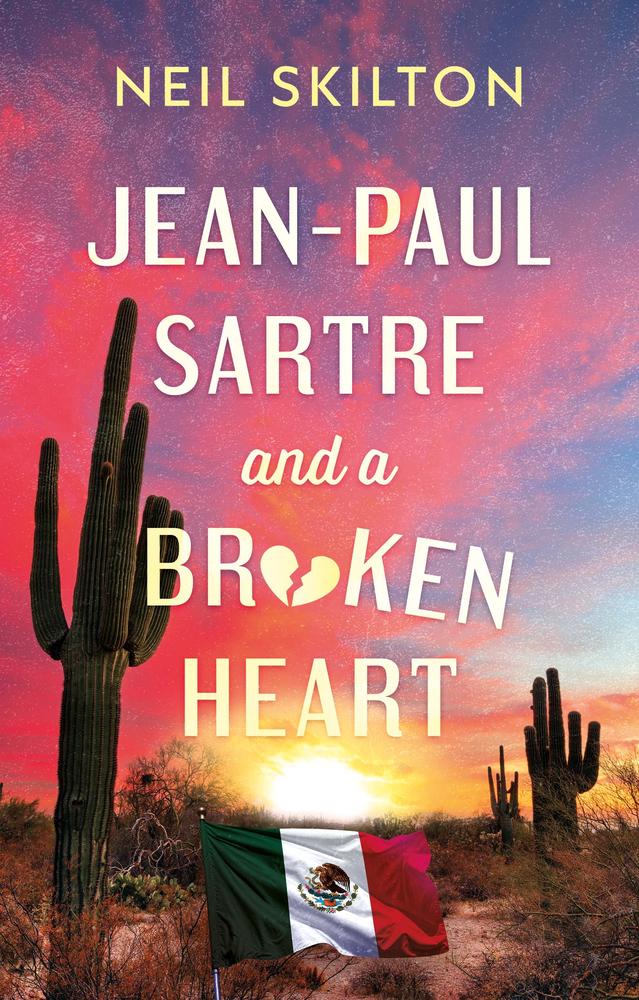
Neil Skilton’s Jean-Paul Sartre and a Broken Heart is an intelligent and often witty philosophical novel with a convincing sense of place. I particularly enjoyed the Mexican adventure setting. The descriptions felt vivid and believable, giving the impression that the author knew the places he was writing about rather than merely using Mexico as an exotic backdrop. The friendship between Steve and Clive lies at the heart of the story. Clive is attempting to mend his broken heart by constantly trying to “get a leg over” with almost any woman he finds attractive, while the more cautious Steve is usually there to remind him of the possible consequences. Steve is not entirely above trying his luck himself, but whenever he does, he seems destined to get the short end of the stick. Their contrasting personalities provide much of the novel’s wit while capturing the insecurity, bravado and confusion of young men navigating sex, friendship and the process of becoming adults. Existentialism plays a major role rather than serving merely as intellectual decoration. Sartre’s philosophy becomes part of the characters’ attempts to understand themselves, their relationships and the choices they make. Some of the most memorable passages are also among the wittiest, particularly the observations about Sartre himself: older, physically unappealing, with bad teeth and questionable hygiene, yet apparently irresistible to young female philosophy students. The contrast between lofty philosophical ideas and messy human behaviour is one of the book’s strengths. My main difficulty was with the execution of the point of view. At times, I found it hard to tell whether a chapter was being told from Steve’s perspective or Clive’s, and I would occasionally be a page or two in before realising I had mistaken one for the other. I also felt that some thoughts and grievances were repeated more often than necessary. A tighter edit would have improved the pacing and made the two voices more distinct. The ending also felt slightly out of balance. Clive’s conclusion seemed like the novel’s natural emotional endpoint, and I would have preferred Steve’s story to finish alongside it. Despite these reservations, the wit, philosophical ideas, central friendship and convincing sense of place kept me reading. An engaging, thoughtful and imperfect novel about friendship, sex, existentialism, and the bewildering process of becoming an adult.
