

6th November, 2026
7 min read
Vanity, Self-Publishing and Hybrid Publishing: What's the Difference?

Written by:
Becky Connolly
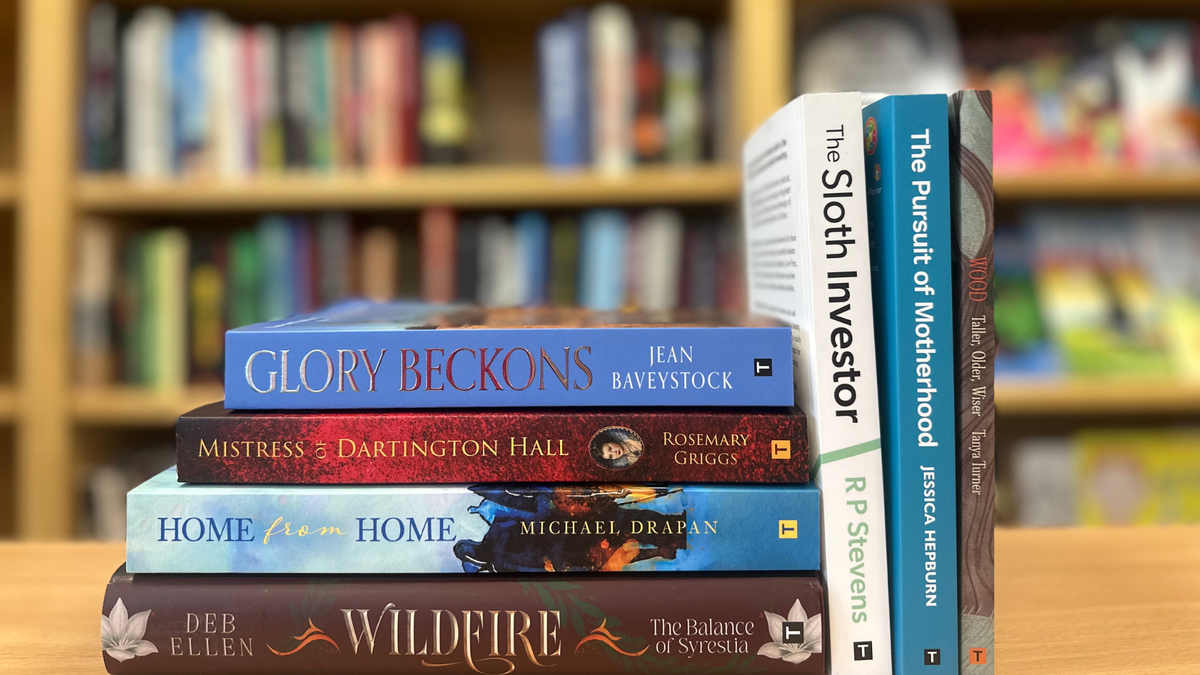
The books in the cover photo are Mistress of Dartington Hall and Medea, both books published through Troubador.
As the publishing landscape continues to evolve, there are many terms that often get confused for one another. Three such terms that are often used interchangeably (but have quite different meanings!) are vanity publishing, full-service self-publishing and hybrid publishing.
To ensure that you are working with the right company for you, it is really important to understand the difference between these three terms.
What is The Difference Between Vanity Publishing, Full-Service Self-Publishing and Hybrid Publishing?
Full-service self-publishing is when an author pairs with an authentic self-publishing company to create a professionally-produced self-published book, with input from both the publisher and the author, but the author pays for the project and retains the rights. Hybrid publishing is when both the author and the publisher financially invest in the publication. Vanity publishing does also require the author to pay for the project upfront, however, they will often take away your creative control, book rights and sales profits, and often have unclear payments and will entice the authors with promises of success.
Why is there confusion amongst these terms?
There is confusion because of the history of the terminology of ‘vanity publishing’.
Historically, ‘vanity publishing’ was deemed as a last option for authors whose titles weren’t accepted by mainstream publishers. However, the options for self-publishers and the attitudes to self-publishing have changed. Now self-publishing has become a respected and very popular route to market and, with that, has led to the rise of authentic publishing models, such as full-service self-publishing. In this change, authentic paid-for publishing services sometimes still get confused as ‘vanity publishing’. However, there is a clear distinction between authentic self-publishing and hybrid services to vanity publishing.
The Alliance of Independent Authors defines the difference between self-publishing and vanity publishing as follows: “we have kept the negativity implied in the vanity press appellation to distinguish between bad-actors in the marketplace versus publishing services companies that are competent and valuable to the kind of author who is willing to pay for support.”
Let’s look into this a bit more:
What is Full-Service Self-Publishing?
Full-service self-publishing is when an author works with a legitimate self-publishing company. With full-service self-publishing, the author will retain 100% of rights, creative control, have a clear understanding of their financial contribution, and will receive a high-quality end product.
Full-service self-publishing brings the quality of traditional publishing, with the freedom of self-publishing. There are a few ways to identify what is a legitimate self-publishing company:
- Author retains rights: With a full-service self-publishing company, the author should retain 100% of rights. It’s self-publishing, after all!
- Author makes the final decision: full-service self-publishers will always offer their opinion, however, as it’s self-publishing, the author will always have the final say.
- Selective: Full-service self-publishers won’t publish absolutely everything: they have a process which allows them to assess if the manuscript is a good enough quality to associate with their publishing house. At Troubador, for instance, we accept around 80% of submissions that are submitted to us.
- An honest process: when talking to authors, full-service self-publishers should be very honest, whether it’s about costs or the authors’ chances of success. If a publisher is guaranteeing you success (which no publisher can do!) then it’s likely that they’re a vanity publisher.
- Author pays for the full cost, with a clear cost breakdown: with full-service self-publishing the authors do pay for the full cost, however, most importantly, the author will receive a clear cost breakdown prior to signing a contract. With full-service self-publishers, the company will make it abundantly clear what you’re paying for, and when you’re expected to pay for it, and there should be no unexpected costs.
- High-quality end product: the beauty of full-service self-publishing is the premium product at the end. Working with professionals and access to premium printers should leave you with a high-quality end product, which should be indistinguishable from traditionally published titles.
- Marketing and distribution: full-service self-publishers should offer marketing and distribution services, allowing your book to reach your readers with ease.
- Easy-to-cancel contracts: if you’d like to cancel your contract, an authentic full-service self-publisher will make that an option for you.

As a result of the high-quality publication and our distribution set-up, many Troubador authors see their books in bookshops up and down the country, including Waterstones.
What is Hybrid Publishing?
As we said, hybrid publishing is when both the author and the publisher are financially investing in the project. Hybrid publishing is normally more selective than full-service self-publishing and vanity publishing, and will have more of a focus on commercial success.
Let’s look into what hybrid publishing entails:
- Both the author and the publisher invest: the split between the publisher and the author can vary across individual titles and publishers, however, hybrid publishing means that both parties have financially invested in the publication of a title.
- Focus on commerciality: as both the publisher and author are investing, hybrid publishers will be specifically looking for titles that have a commercial angle. Books that have quite a niche audience and lack commercial appeal will be better suited to full-service self-publishing.
- More selective: once again, as both parties are investing hybrid publishers are more selective. They will be even more thorough when it comes to assessing the writing quality and book’s likelihood of commercial interest.
- Higher creative input from the publishing company: as both parties are investing, hybrid publishing does mean that the publisher will have a higher level of control over decisions than an author would when full-service self-publishing
- High-quality end product: as you are working with professionals, you will receive a high-quality end product.
- Marketing and distribution: similarly to full-service self-publishing, hybrid publishers should offer you a comprehensive marketing and distribution set-up, and they should enable you to reach key retailers, including physical bookshops.
What is Vanity Publishing?
Vanity publishing is when a publishing house will require an author to pay for the full publishing fee, however will have no vetting process, will often lock the authors into restrictive, long-term contracts and take some of your copyright, have obscure pricing and hidden fees, poor distribution and poor royalty payments.
The Alliance of Independent Authors defines vanity publishing as “publishing services that engages in misleading or, in the worst cases, outright deceptive practices, with the intention not of bringing books to readers but of extracting as much money as possible from the authors.”
Let’s look at what vanity publishing entails:
- Authors lose rights: often, with vanity publishers, they will take a portion or all of the rights of a publication from an author.
- Non-selective: they will not be selective about the quality of a publication, as their main concern is receiving the authors’ money.
- Entice authors: often, authors will be flattered into publishing with them: there will be promises of great success, with large sales numbers being articulated. As stated by The Alliance of Independent Authors “vanity presses engage in aggressive, misleading and deceptive tactics to sell their services.” This is always a red flag, as not even traditional publishers can guarantee a title’s success.
- Obscure pricing and hidden fees: vanity publishers will often hide the costs of certain services prior to authors signing a contract, or offer high-pressure sales tactics to upgrade author packages.
- Poor-quality end product: authors often end up with a low-quality end product, despite paying high fees for publication.
- Marketing and distribution: bare minimum marketing support, providing only small efforts (i.e an online listing) whilst promosing a larger marketing campaign.
How to Tell If Your Publishing Company is Legitimate
Unfortunately, vanity publishers often disguise themselves as self-publishing companies or hybrid publishers, so identifying what is a legitimate company and what is a vanity publisher can be quite challenging. However, there are a few resources out there to help support authors.
The Alliance of Independent Authors
The Alliance of Independent Authors has a watchdog, which offers a rating of self-publishing services and defines which categories they offer. If they do rate a company as either ‘mixed’, ‘caution’ or ‘watchdog advisory’, they explain exactly what the concerns are and what authors should look out for.
TrustPilot
Of course, Trustpilot is a brilliant resource for anyone looking into a company. It allows authors to see what other people’s experiences with the company are, and it can be a great way to identify if people have had a positive experience, and, if the comments are negative, if there are any common themes across the complaints. This can help you ascertain if they are the right company for you.
You can check out Troubador's Trustpilot page here.
Writers’ & Artists’ Yearbook
First founded in 1906, The Writers’ & Artists’ Yearbook is the authoritative resource for writers looking for practical guidance about how to get in touch with the publishing industry, as well as providing essential insight into the creative and publishing process. They provide over 100 advice articles, provided with a combined list of over 5,000 industry contacts. Published annually in July, this yearbook really ensures you have up to date information on the publishing industry.
 Troubador's Managing Director, Alex Thompson, with the 2027 Writers' & Artists' Yearbook, which features Troubador Publishing.
Summary
Whilst conversations surrounding full-service self-publishing, hybrid publishing and vanity publishing can often get confused, these are three very different routes to market. If you’re ever concerned about your company, our top tip is to research, research, research! (Especially before signing any contracts!)
About the Author
Becky Connolly
Marketing Executive
Becky joined Troubador in September 2025. She studied her BA in English at Exeter, and her MA in Creative Writing at Royal Holloway. Alongside this, she has edited three self-published novels, spent a year writing for the Publishing Post, and worked in marketing in both the education and agriculture sectors. Becky brings her experience of marketing strategy and content creation to craft effective marketing campaigns, promoting Troubador’s services and our authors’ books. In her free time, she loves reading, writing, and treating her cockapoo to long walks and puppacinos.