
14th August, 2026
7 min read
8 Self-Publishing Success Stories

Written by:
Becky Connolly
We talk to aspiring self-publishers everyday, and so many people ask one question: do authors even get success through self-publishing? It’s easy to think that the only way to gain commercial success is through a traditional publisher, but there are a whole host of authors who have launched thriving author careers from self-published novels, who are now incredibly well known.
This article explores a range of different authors who saw literary success from their self-publishing path, and top tips for aspiring self-publishers to help increase their chances of success in today’s publishing landscape. Give the article a read, you may be surprised at how many self-published authors you know!
Jane Austen
Jane Austen’s self-publishing model was actually very similar to that of Troubador’s. As a self-publisher, Austen paid for the costs of publication, however, the publisher handled the distribution. Doing it this way, Austen retained ownership of her copyright (like our authors do), had a professional quality book and didn't have to worry about how her book would get to her readers.
Her first book that was self-published was Sense and Sensibility, with Thomas Egerton as the publisher in 1811. Her first print run consisted of 750 copies (which was a lot for a debut author back then), and sold out. After a traditional publishing run for Pride and Prejudice, Jane returned to self-publishing for Mansfield Park and Emma.
Beatrix Potter
Peter Rabbit is a household staple; we all grew up knowing about the mischievous little rabbit in a blue jacket. The little rabbit’s journey began to capture Britain’s hearts in 1901, when Beatrix Potter made the decision to self-publish.
According to The Guardian, Beatrix began writing the Peter Rabbit stories to entertain a sick child. She sought traditional representation but, frustrated by her rejections, took matters into her own hands and self-published 250 copies. It was so successful that, within a year, one of the publishing houses who rejected her came back. This wasn’t the end of Beatrix’s self-publishing story, however; when she couldn’t agree with her publisher about her next book, The Tailor of Gloucester, she self-published again.
The value of that original title has, naturally, increased significantly. There is one of a few surviving copies on sale in Oxford, going at £35,000 (just a tad more expensive than a Waterstones special edition hardback, don’t you think?)
Margaret Atwood
Yes, the incredibly famous Margaret Atwood, known for novels such as The Handmaid’s Tale, Alias Grace, and The Penelopiad, started her literary career as a self-published poet. She self-published Double Persephone at the age of 21 in 1961, printing 200 copies and selling them herself at a price of 50 cents each. The value of these have gone up exponentially; following the author’s success, copies of this book now sell for as much as $1,800, according to The Writer. She published her next set of poetry with an independent press, Contact Press, and started traditionally publishing in 1969. She has now published over 50 (!) books, and is the winner of many awards, including two Booker awards.
Ben Hunt-Davis and Harriet Beveridge
New York Times Bestseller Will It Make The Boat Go Faster began when Olympic gold-medallist Ben Hunt-Davis and his performance coach Harriet Beveridge decided to self-publish with Troubador in 2011.
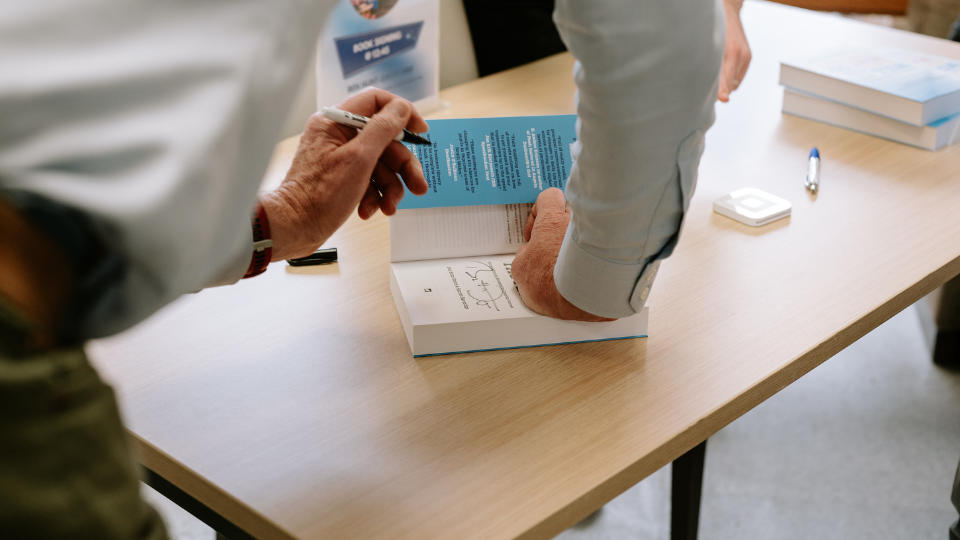
Hunt-Davies at the Self-Publishing Conference in 2024.
The pair were keen on the control and freedom that self-publishing offered but recognised that success would depend on achieving the same professional standards as professional publishing. Enter Troubador – and now they’ve sold over 100,000 copies across multiple formats, and had the third edition published by Penguin Random House. What’s more, their publication has been fundamental in supporting Ben’s consultancy business, where his book has enabled him to educate and connect to thousands of readers.
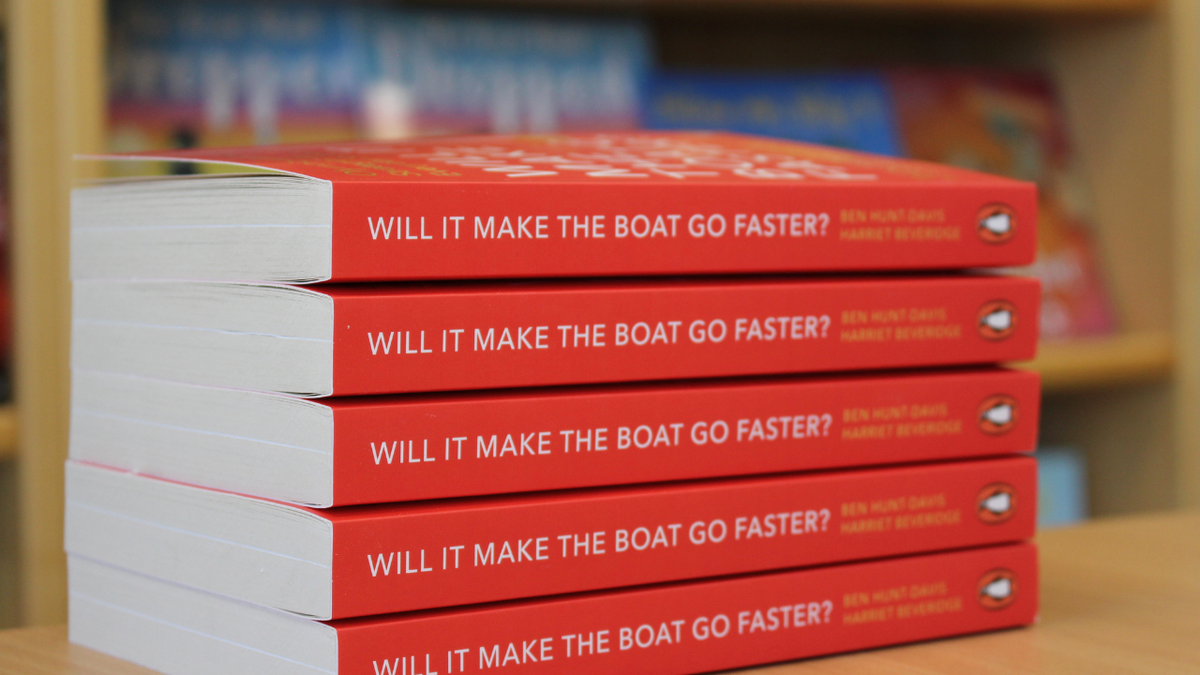 The editions of Will It Make The Boat Go Faster after publication with Ebury, Penguin.
Colleen Hoover
Colleen Hoover is a New York Times Bestseller and romance fan-favourite, perhaps best known for her novel, It Ends With Us, which has since been created into a film starring Blake Lively. However, did you know that her first New York Times bestseller was her first book, Slammed, which she self-published?
In an interview with Writers & Artists, she reveals how she wrote Slammed as a Christmas gift for her mother. After some research she decided to go ahead with self-publishing, so that her friends and family could have access to it.
When Writers and Artists asked if Colleen Hoover would have taken the traditional route if it had been an option, she says: “it’s hard to say, but I probably would have. Fortunately, I was able to self-publish first and I’ve got the best of both worlds that way.”
And Colleen Hoover’s advice for self-published authors? “Be persistent and don’t give up!”
She has now sold more than 23 million books.
E L James
The well-known 50 Shades of Grey actually started as online Twilight fan fiction, entitled Master of the Universe, on a fan fiction website. However, due to the nature of the mature content being flagged on the website, James decided to self-publish the book in 2011.
Following her self-publishing success, James’s novels were picked up by Vintage Books, an imprint of Penguin Random House. The book and its sequels, Fifty Shades Darker and Fifty Shades Freed became bestsellers, selling more than 65 million copies. She is now an incredibly well-known author, success that wouldn’t have been possible without her decision to self-publish.
Rupi Kaur
When I hear Rupi Kaur, I think of bees. This is because her poetry collection was such a literary phenomenon, and her books were everywhere. Waiting by the till of every Waterstones, black background, white bees: milk and honey.
milk and honey is another New York Times bestseller, which began after Rupi wrote, illustrated and self-published milk and honey in 2014. Utilising Instagram, she shared her poetry to build an audience and sold over 10,000 copies. Since then she has published the sun and her flowers and home body which have sold over 12 million copies, and milk and honey is one of the highest-selling books in the 21st century.
Barbara Winton
One Life is the 2023 autobiographical film starring Sir Anthony Hopkins, Helena Bonham Carter, and Jonathan Bryce.
This film is based on the true story of humanitarian Nicholas Winton whose story, If Not Impossible: The Life of Sir Nicholas Watson, was recorded by his daughter Barbara, and self-published by Troubador in 2013. The book was an instant success, and the title had to reprint several times over the next couple of years.
By 2017, it had attracted the attention of TV and film agents, until Barbara would eventually confirm to Troubador’s founder, Jeremy Thompson, that the film was certainly going ahead, with Sir Anthony to play her father. The film was created in 2021-2022 with Barbara as a producer. Sadly, Barbara passed away shortly before the film’s release. Since then, the film has won the Cinema for Peace Dove Most Valuable Film of the Year in Berlin in 2024, and the book has been re-released by Robinson (Little Brown) as One Life.
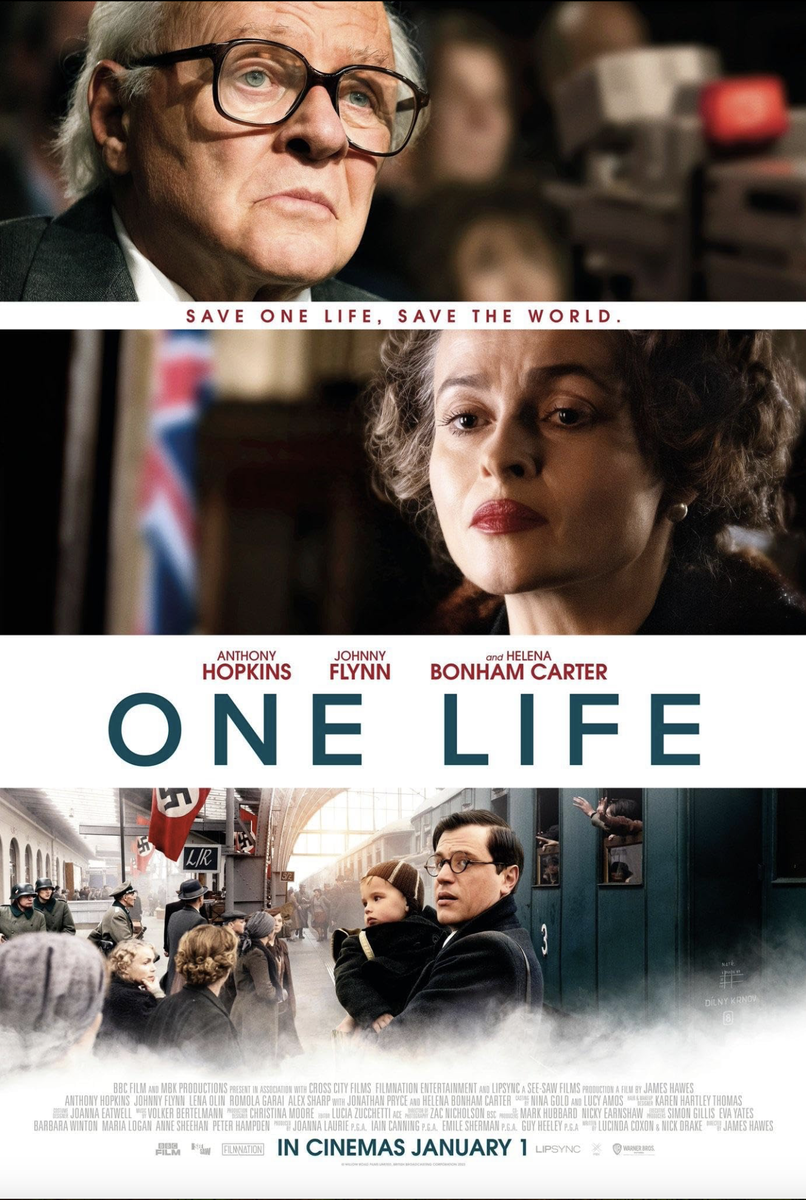 The poster for One Life, the major motion picture inspired by a Troubador publication.
What should authors take away from this list?
For many authors, self-publishing is the right route to go down: it offers freedom, higher royalties, and simply put: the ability to get your book out there. As we’ve explored, there are plenty of success stories in the world of publishing: but what does that mean for you?
Of course, there are so many questions to ask. Firstly, what does success mean to you? Would you like to see your books in bookshops, or educate a specific community, or use it as a credibility tool in business? All of these are brilliant reasons to self-publish, and we’ve seen plenty of authors achieve their goals.
Once you’ve defined your goal, then you should make your strategy. For instance, if you’d like to see your books in bookshops, then make sure you opt for a self-publisher which allows distribution to brick-and-mortar bookstores (as opposed to just online retailers). If you’d like your book to be a credibility tool for business, you should also consider professional services such as editorial – you don’t want potential clients to notice a typo in your book! For authors who want greater visibility for their book, consider marketing on platforms such as Instagram (like Rupi Kaur did!) and learning different ways to acquire lots of reviews to boost credibility. Publishing your book is the first hurdle: self-published authors have to continue working on promoting their book, if you want to see results. Like Colleen Hoover said: be persistent, and don’t give up.
This article has demonstrated that self-publishing isn’t new. However, the routes available to self-published authors are, allowing more books to be published than ever before. For authors who want to see self-publishing success, we recommend you aim for quality and visibility. Working with professionals on a range of services, such as cover design, editorial, or marketing, can help ensure your book stands out of the (very busy!) crowd.
About the Author
Becky Connolly
Marketing Executive
Becky joined Troubador in September 2025. She studied her BA in English at Exeter, and her MA in Creative Writing at Royal Holloway. Alongside this, she has edited three self-published novels, spent a year writing for the Publishing Post, and worked in marketing in both the education and agriculture sectors. Becky brings her experience of marketing strategy and content creation to craft effective marketing campaigns, promoting Troubador’s services and our authors’ books. In her free time, she loves reading, writing, and treating her cockapoo to long walks and puppacinos.