
10th April, 2026
8 min read
Do I Need An ISBN? Everything You Need to Know About ISBNs

Written by:
Jonathan White
‘How do I buy an ISBN?’ ‘Do I need an ISBN?’ ‘What is an ISBN?’ 'How much does an ISBN cost?'
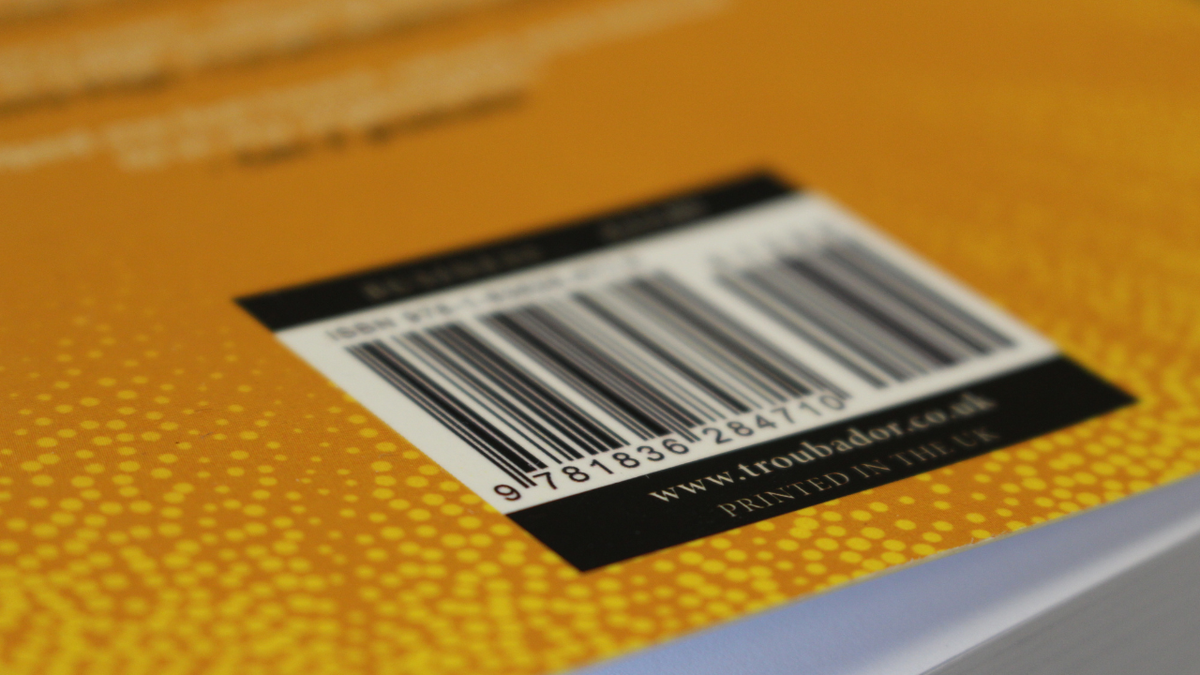
These are all questions we often get asked by aspiring self-publishers. For a collection of just 13 numbers, linked together, the International Standard Book Number does play an absolutely fundamental role in the life of a published book. This simple number, universally referred to as the ISBN, helps publishers, distributors and booksellers to identify and track the stock and sales of each and every book sold in the UK and around the world.
The idea that every book should have a single ISBN first started back 1965 when WHSmith asked Gordon Foster, Emeritus Professor of Statistics at Trinity College, Dublin to come up with an algorithm to help booksellers track books. The first ISBN was generated in 1967 in the United Kingdom by David Whitaker, a man who is widely regarded as the Father of the ISBN. It originally started as a 10-digit format identifier, but had to be expanded to 13 digits in 2007 due to the sheer number of products that it needed to classify.
Today the International ISBN Agency is the registration authority for controlling the scheme on a global basis. In the UK ISBN Agency is licensed to Nielsen Book Services by the International ISBN Agency to supply ISBNs to publishers in the UK and Ireland, as well as a number of British overseas territories from such places as far apart as the Falkland Islands and Tristan da Cunha.
Part of the ISBN setup is to allocate ISBN Publisher Prefixes to eligible publishers and, as a result of this, Nielsen Book maintains a large database of over 60,000 publishers with their prefixes. They also in turn supply this UK and Ireland based information to the Publishers International ISBN Directory.
The importance of the ISBN is fundamental for the proper listing of titles with bibliographic agencies around the world. But how can an aspiring self-publisher truly understand ISBNs and how they are used?
This article will cover all the important information regarding ISBNs, including how they are formulated, how they are used, the link between ISBNs and self-publishing, ISBNs and libraries, and how you can buy an ISBN.
How is an ISBN formulated?
The ISBN is broken into five elements.
- Prefix: this shows that the product identifier is a book (This was the main change from when the ISBN went from a 10 to 13 digit number).
- Registration Group: which identifies a country, area or language area where the publisher is based and the ISBN is assigned
- Registrant (Publisher) identifier: this then identifies a particular publisher and usually indicates the exact identification of the publishing house and its address
- Title Identifier: most importantly identifying a specific edition of a publication to a specific publisher
- The last number in the ISBN is a check digit, which validates the whole number and means that an ISBN cannot be incorrectly used.
How ISBNs are used
The whole idea of an ISBNs is that each one will identify a single unique product. As well as the title of the book, it will show its publisher and the imprint within that publisher, and the location of that publisher. The ISBN is also for a single edition, and format, of that book and ISBNs are permanent: once assigned that ISBN identifies that book and format for life.
Actually, each ISBN only contains only a small amount of information, but this is crucial data as it is used as a key to unlock a much larger amount of data, or as it is called Metadata, that is then held on various book databases. On the Nielsen Book database a single book record can have over 500 other data elements, which gives vital and, if it is done properly, complete information about every aspect of the book.
A single book title may have many, many different incarnations, or books attached to that title, and it is the ISBN that differentiates all of these various titles, formats and editions. For example, a book with the famous title Great Expectations can include not only the most famous Dickens novel, but also a report on schooling in Rwanda, on Australian politics, the tourism industry, delivery in health systems, graduate careers, the Toronto Blue Jays’ 2013 failed season, the psychology of money and marriage and divorce in post-Victorian America. The list for this title is actually endless but every single one of them will have a different ISBN.
Because the ISBN system exists, retailers are then able to buy data from Nielsen Book for their stock control and ordering databases. Using the ISBN they can differentiate between all incarnations of a title, in order to keep prices and availability accurate and updated.
Do ISBNs protect against copyright?
One thing that should be pointed out is that there is a quite widely held belief that ISBN protects copyright on a book. In reality it does not do this. The ISBN is just an identifier about the title of the book, for which the copyright rests with the author. Copyright covers works fixed in a tangible format, but book titles don’t fall under copyright protection because they tend to be too short, so cannot be copyrighted (although they can in some cases be trademarked).
ISBN and self-publishing
It is a not so well known fact that the largest group now purchasing ISBNs are those who identify themselves as self-published authors. Unfortunately many who do not have professional help with their self-publishing will get to the printing stage before realising they need an ISBN. This is a great shame as the author will not then have information about best practices for ISBNs, as well as other important facets of the books such as imprints, setting up a publisher name, title registration, all of which are vital for successfully publishing your book.
So, anyone self-publishing a book should consider the following questions when deciding whether they need an ISBN or not:
- Do you want your books to be discovered by retailers in the UK, as well as around the world?
- Do you want to sell books in the UK book market, and also around the world as well?
- Do you want to be able to get more information about these sales?
- Do you want to give more information to all of these retailers about the book and its contents?
If your answer is yes to any of these, you then need an ISBN for your book.
ISBN in libraries
The big problem with searching by title, author and keyword is that this may bring up multiple results, but searching by specific ISBN will only bring up one single result. As well as retailers this is especially helpful in libraries, and, as they become digital, the ISBN is a powerful tool for locating a title. As well as sales the ISBN also allows Nielsen to measure loans in the UK and match them to the sales of the book to get a fuller picture of an author’s readership. For example, the hardback edition of The Midnight Line by Lee Child, ISBN 978-0-5930-7818-1 published by Transworld in 2017 was the most borrowed title of 2018, with nearly 27000 patrons taking it home throughout the year from the branches we measure, and further 16000 copies were purchased in that time in the UK. While the hardback proved more popular at libraries, the paperback, ISBN 978-0-85750-361-9, was released in 2018 and garnered more sales, reaching nearly 355000 copies sold and 9000 borrowed, according to data from Nielsen Book Research.
How you can purchase ISBNs in the UK
The ISBN is geo-specific meaning that if you are based in the UK or Ireland and want to publish your book you should contact the UK ISBN Agency: Nielsen Bookdata. However, if you are English but living and publishing in Spain, you would need to contact the Spanish agency instead. Wherever you are publishing in the world you will be able to find an ISBN agency near you, and if for any reason you are not able to do this, the International Agency will be happy to help in these instances. In the UK all ISBNs are purchased from Nielsen Bookdata. Buying online is the fastest and most popular way to purchase either a single ISBN or larger allocations, up to a block of 1000, and this also includes access to other Nielsen Book services. There is also an offline application process but this is significantly slower.
If you are publishing your book with Troubador (whether it is an ebook, printed book or audiobook), sourcing an ISBN is something that we can do for you – and if you are using Troubador for your distribution, we recommend you use a Troubador ISBN.
Nielsen Book also provides a range of other services to the book industry internationally, all aiding the discovery and purchase, distribution and sales measurement of books. They provide a range of electronic trading solutions, including Nielsen PubEasy, which help everyone involved in the book supply chain trade more easily. Their research services provide retail sales analysis for both print and e-books alongside research from Nielsen’s Books and Consumers Survey. And for publishers, they offer a range of services from assigning an ISBN to your book to adding your metadata to our database and promotional tools to help market your book.
But the most important thing in the whole chain of information about each and every book available in the world today is that little ISBN number that will be found on just about every book selling within the book trade.
How much do ISBNs cost?
It all depends where you get them from. If you are publishing a book with Troubador, the cost of the ISBN is part of either the Retail Set-up and Distribution service, or the Trade Marketing and Sales Representation service. However, if you are looking to purchase your ISBN individually, Nielsen lists them for £93 for ISBN, or discounts on bulk orders. If you are publishing with other platforms, such as Amazon or Ingram Spark, you can get free ISBNs, however these ISBNs will be limited to the use of that particular platform.
Summary
Having an ISBN is critical for self-published authors who want their books to be available in bookstores, libraries and online retailers. Understanding exactly why ISBNs are so important is even more important for a self-published author – you will be undertaking the work, after all!
If you need support, including metadata management, distribution and ISBN allocation, Troubador can help. Our marketing services are available to books published by Troubador, to help ensure authors have access to professional tools for their books.
This article was written by Jonathan White, utilising data formerly provided by Eleanor Pigg from the UK ISBN & SAN Agency.
About the Author
Jonathan White
Sales and Marketing Manager
Before joining Troubador in 2017, Jonathan worked for more than 30 years in many different areas of the book industry. Starting in book retailing, where he was a book buyer and bookshop manager for some of the largest London bookshops, he then moved over to publishing, where he has worked for big-name publishers such as Oxford University Press, Chrysalis Books, Anova Books and Phaidon. He has worked in the UK book trade, spent time in International sales, and lived overseas for several years while continuing to work in publishing.