

2nd August, 2026
9 min read
How Has Self-Publishing Changed? 30 years of Troubador

Written by:
Alex Thompson
On 2 August 2026, Troubador celebrates its 30th anniversary. It’s a milestone that offers the perfect opportunity to reflect not only on our own journey, but on how dramatically the world of self-publishing has changed over the past three decades.
When Troubador was founded in 1996 by my father, Jeremy, the publishing landscape looked very different. For most aspiring authors, traditional publishing was seen as the only credible route to getting a book into readers' hands. Self-publishing was often considered a last resort, associated with high upfront costs, limited distribution, and books that struggled to compete with those produced by established publishers.
Fast forward 30 years, and the picture couldn't be more different. Advances in technology, the rise of online bookselling, changes in print production, ebooks and global distribution have transformed independent publishing from a niche alternative into a respected, mainstream choice. Authors now have access to professional editing, design, printing and worldwide retail channels that were once available only to large publishing houses. More importantly, they have the freedom to choose the publishing path that best suits their goals.
Over those same three decades, Troubador has grown alongside the industry, supporting thousands of authors as self-publishing has become a mainstream choice rather than a niche one. While the tools, technology and opportunities have changed enormously, one thing has remained constant: helping authors publish professionally and reach readers with confidence.
Breaking Down the Barriers
When Troubador was founded in 1996, the publishing industry was built around a simple principle: if you wanted readers, you first needed the approval of a traditional publisher. For most aspiring authors, securing a publishing contract wasn't just the preferred route; it was widely seen as the only viable route. Publishers acted as gatekeepers, deciding which manuscripts made it onto bookshop shelves and, ultimately, into readers' hands. If your work wasn't accepted, your options were severely limited.
Self-publishing did exist, but it looked very different to today. Printing books required significant upfront investment, and short print runs rarely made financial sense. Authors often had to order and store hundreds or even thousands of copies themselves, while distribution beyond local bookshops was difficult and expensive.
Perhaps more challenging than the practical barriers was perception. Fairly or unfairly, self-published books were often viewed as inferior to those released by established publishers. Regardless of quality, many readers, booksellers and reviewers assumed that if a book hadn't been picked up by a traditional publisher, there must be a reason.
In many ways, publishing in 1996 was like trying to get a song played on national radio. Unless a major record label believed in you, very few people would hear your work. The gatekeepers controlled access to the audience. For many authors, the biggest challenge wasn't writing a great book - it was persuading someone else to let them publish it.
But as the internet gained momentum in the late 90s, new publishing tools and distribution channels began to open up in a way that hadn’t been possible before.
Technology Connects Authors to Readers Directly
In the early 1990s, an author's ability to reach readers was largely determined by who stocked their book. Discovery happened through bookshops, libraries and newspaper reviews, making it difficult for independent authors to build an audience without the backing of a traditional publisher.
The internet changed that dramatically. Online booksellers removed many of the geographical limits that had shaped publishing for decades. Instead of relying on local bookshops, a book could be made available across the UK and, eventually, worldwide. Independent authors suddenly had access to the same global marketplace as major publishers.
At the same time, communication became far more direct. Websites gave authors an online home, blogs allowed them to share ideas and expertise, email newsletters helped build loyal communities, and social media created conversations with readers that weren’t possible before.
Technology didn’t just make publishing easier. It changed who had the opportunity to succeed. Authors were no longer dependent on traditional publishers to connect with readers. They could build platforms, grow audiences and take far greater control of their publishing journey.
Self-Publishing Goes Mainstream
One of the biggest shifts over the past 30 years hasn’t been technological, but cultural. In the 1990s, self-publishing was often seen as something authors turned to when traditional publishing wasn’t an option. Today, that perception has changed completely. Independent publishing is now a respected and established route to market, with professionally produced books regularly sitting alongside traditionally published titles in bookshops, online retailers and industry awards.
Independent author success has played a major role in changing that perception. Bestselling books, award-winning titles and sustainable author businesses have shown that success is determined not by how a book is published, but by the quality of the work and the strategy behind it.
At the same time, authors are far more informed about their options. Many now deliberately choose self-publishing for creative control, higher royalties, faster publication, or the ability to build a long-term publishing business. Others move between traditional and independent publishing depending on the project.
As a result, the conversation has shifted. Thirty years ago, the question was often, “Can I get a traditional publishing deal?” Today, it is more likely, “Which publishing route best supports what I want to achieve?” Self-publishing is no longer the alternative route. It is one of the main roads to publishing a book.
Authors Have More Choice Than Ever
One of the most significant outcomes of the past 30 years is the range of publishing options now available. Where once there was an expectation to pursue a traditional deal, today’s landscape is far more flexible. Authors can choose the route that best fits their goals, budget and level of support.
Traditional publishing remains an important route, offering editorial backing, market reach and industry credibility. Alongside it, a wide range of independent publishing models has developed.
Some authors choose full-service self-publishing, working with providers like Troubador, which manages the entire production process from manuscript to finished book. Others opt for assisted publishing, using freelancers or specialist organisations like Libero for areas such as editing, production or marketing. Platforms such as Amazon KDP and IngramSpark have made global publishing and distribution more accessible than ever.
In addition, partnership publishing models, such as those offered by The Book Guild, combine elements of traditional and independent publishing. Crowdfunding has also become a viable route for some authors, while digital-first publishing continues to grow as reading habits evolve.
What connects all of these routes is choice. Authors are no longer pushed down a single expected path-they can choose the approach that aligns with their ambitions, resources and desired level of control.
Professional Quality Is No Longer Reserved for Large Publishers
Alongside greater choice has come a major shift in what independent authors can achieve in terms of quality. Thirty years ago, producing a book to a professional standard typically required access to the infrastructure of a traditional publishing house. Editorial, design, marketing and distribution were largely out of reach for independent authors.
Today, that gap has narrowed considerably. Professional editing is widely available at every stage of the process. Designers who once worked exclusively for traditional publishers now regularly produce covers and interiors for independent books. High-quality cover design has become a key factor in how books compete in both online and physical retail spaces.
Typesetting and interior design are now accessible and affordable, allowing independently published books to meet the same standards expected in the wider market. Distribution networks have also expanded, enabling independent authors to reach global retail channels and major wholesalers.
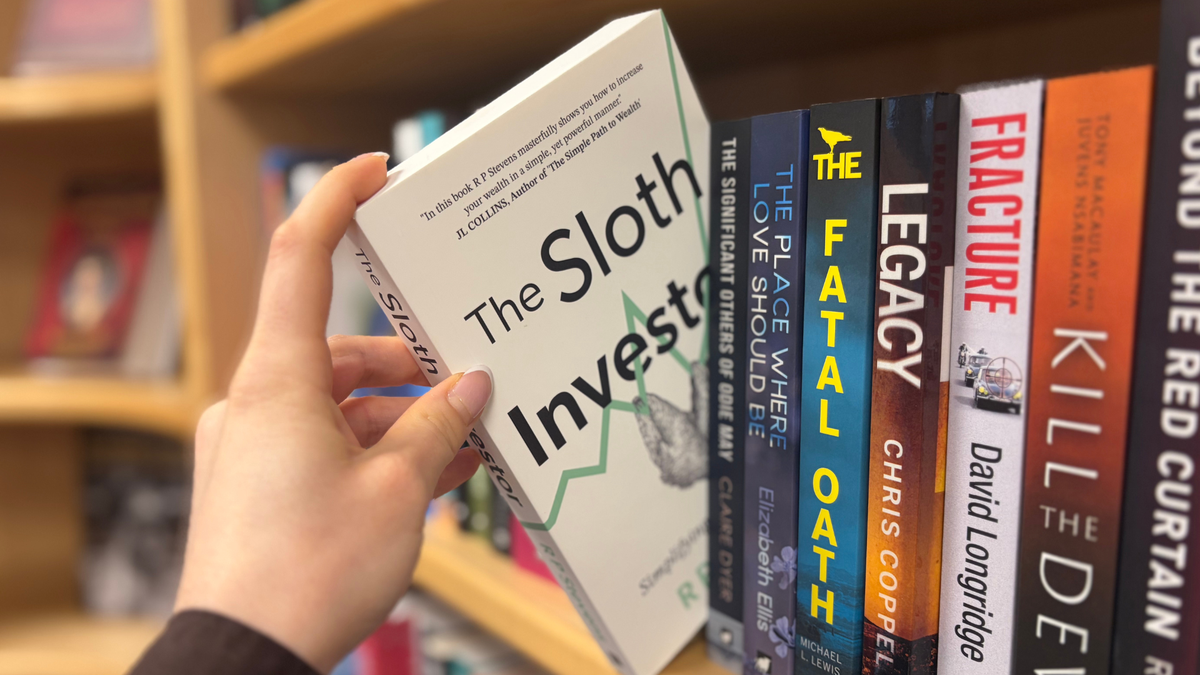
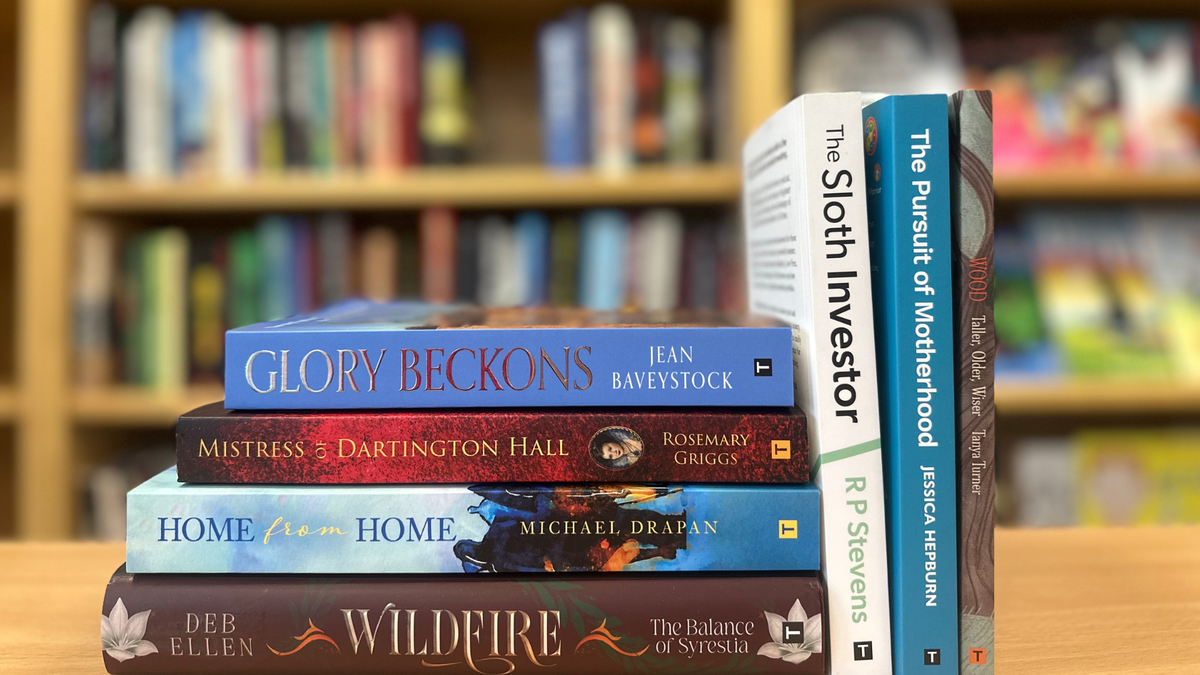
Print quality has improved to the point where independent books can sit comfortably alongside traditionally published titles on bookshop shelves with no noticeable difference in production.
 Professional services enable self-publishers to create high-quality, striking publications, often indiscernable from traditionally published titles.
Alongside this, authors now have access to one-stop publishing providers like Troubador, which bring these services together under one roof. Rather than managing multiple suppliers, authors can work with a single team covering editing, design, production and distribution in a joined-up way.
The result is a clear shift in both reality and perception. The difference between traditionally and independently published books is increasingly defined not by the route taken but by the decisions an author makes and the team they work with.
Traditional Publishing Is Not the Only Definition of Success
Traditional publishing remains an important and respected route. It offers editorial strength, market reach, and prestige, and for many authors, it is still the right choice to pursue a traditional deal, as hard as it can be for them. That is partly because publishers are more selective than ever, particularly with debut authors and carefully curated lists.
However, over the past 30 years, it is no longer the only path to a successful publishing career. As self-publishing has become more professional and widely accepted, the definition of success has broadened. Authors are increasingly measuring success on their own terms, based on what they want their book or career to achieve.
For some, success is reaching a specific audience and building a loyal readership. For others, it is creating a publishing-led business. Many use their books to establish authority, leading to speaking, consultancy or other opportunities, just like Will It Make The Boat Go Faster did.
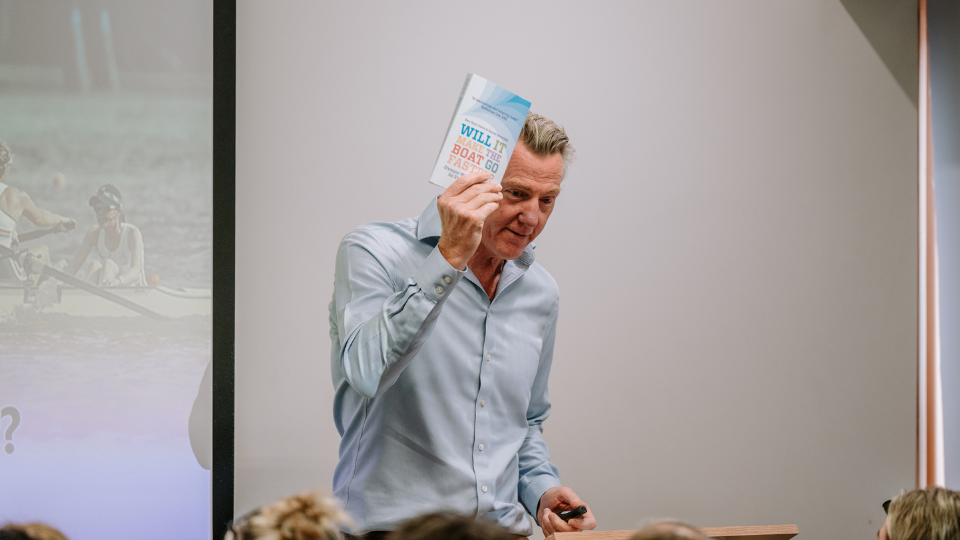 Author of Will It Make The Boat Go Faster, speaking at the Self-Publishing Conference 2024.
Creative control is also a key measure of success, as is ensuring that legacy knowledge or experience is preserved in a professionally produced book. Others simply want to complete a long-term personal project. And for many, success is simply producing a high-quality book for family, friends or a small audience that matters to them.
The result is a more personal and varied idea of what success looks like for authors today.
Troubador’s Place in the Evolution
Over the past three decades, Troubador has worked with thousands of authors, supporting them through an industry that has changed substantially in their favour. From the early days of self-publishing, when options were limited and perceptions were cautious, to today’s global, professional marketplace, we have been involved in every stage of that transformation.
As the industry has evolved, so have we. Our services and processes have continually adapted and improved to ensure authors can access the highest possible standards of publishing support. What hasn’t changed is our commitment to helping authors publish professionally and reach readers with confidence.
Personally, I am incredibly proud to have played a small part in that journey so far, and I’m excited to lead Troubador into its next chapter. The opportunities for authors today are greater than ever, and we remain committed to supporting independent publishing as it continues to evolve.
Thirty Years of Transformation
Over the past three decades, self-publishing has moved from the margins of the industry to its centre. What was once seen as a difficult and uncertain route has become a professional, respected and widely chosen path for authors across every genre.
This shift has been driven by technology, changing reader behaviour and a broader change in mindset. Authors are no longer defined by the publishing route they take, but by the quality of their work and the clarity of their goals.
As Troubador marks its 30th anniversary on 2 August 2026, it is a moment to reflect on how far the industry has come, from gatekeepers and limited options to choice, quality and opportunity, and to look ahead with confidence.
If the past 30 years have been about opening the door to self-publishing, the next will be about how authors use that freedom to define success on their own terms.
About the Author
Alex Thompson
Managing Director
Alex is a seasoned leader with extensive experience in small and medium-sized businesses. As Managing Director of Troubador and its sister company, The Book Guild, Alex collaborates closely with both teams to drive business growth, enhance internal processes and expand opportunities for self-published authors. Passionate about innovation, Alex is always on the lookout for new technologies or processes that improve efficiency and streamline operations to give our authors the best possible publishing experience. Outside of work, Alex enjoys experimenting in the kitchen, exploring the outdoors, being out on the golf course and supporting Leicester City FC.