


Colin Hill
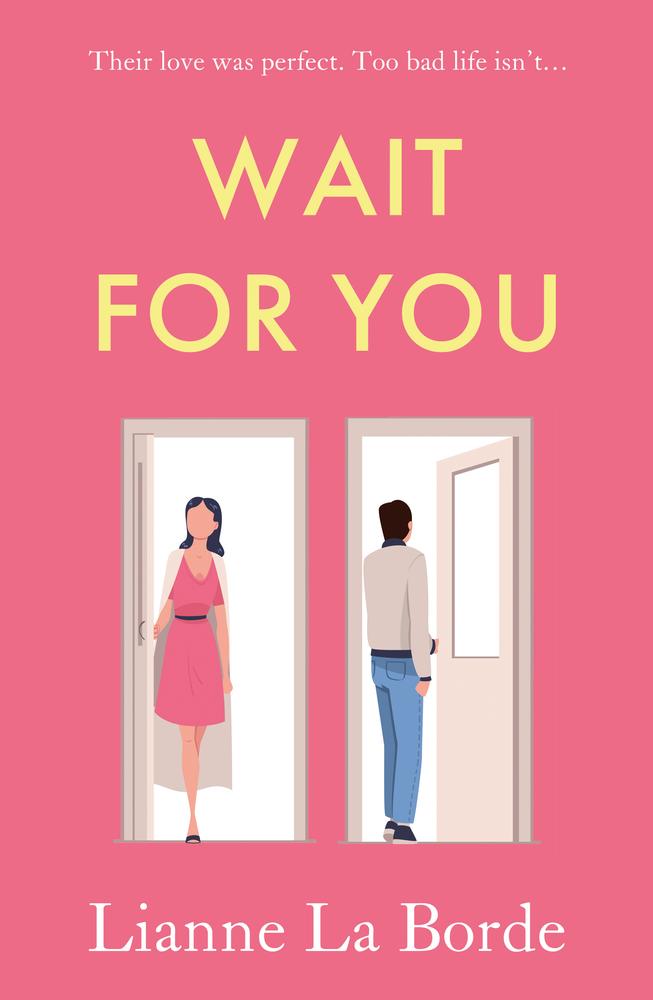
‘Wait For You’ is one of the most intriguing, enthralling love stories I have encountered in a very long time. The course of true love never runs smooth, it’s said, and boy, is this the case here! This is a tale about young love, new love, first true love – about two passionate young lovers – April and Dylan – and the trials and tribulations of their almost obsessive relationship, over a time-span of three or more years. While the writing is crystal clear, a nightmarish intensity holds us fast, as the story unfolds. The novel is grounded in Manchester – the heady, sexy, boozy world of student Manchester - with the ‘action’ also taking us to San Francisco (for artist, April) and Rome (for archaeologist, Dylan) - settings that are realistically portrayed. The characters and narrative are developed, layer after layer, so that a sense of suspense is maintained, with the reader clinging to what he knows – and unsure that his ‘knowns’ will survive the next twist of reality. The multi-layered development of viewpoints and perspectives reminded me of the 18th century epistolary novel – where viewpoints, character-development and perspectives change and evolve over time; often in ways that are novel and uncomfortable. We all, it seems, inhabit our own reality. There is a finely-drawn supporting cast of characters who add their own perspectives to the rich tapestry – from Dylan’s friend (sometimes a dubious one) Adam, to April’s staunch friends Lizzy and Jen. Then there’s the - rather significant - figure of Kel – Dylan’s fiancé... Meanwhile, much of the ‘action’ revolves around the prone figure of April, as she lies in a coma, in hospital – following a fateful car-crash. The narrative viewpoint switches between April and Dylan, so that we are acutely aware of their perspective, and how their reality may differ from that of the other significant characters. There are also alternative scenarios, alternative futures, 'alternative realities' teasingly explored, that emphasise how April’s and Dylan’s – and by extension, our own future - may be fundamentally changed by a single – fateful - decision. Should Dylan leave Kel, and return to April? Or should he take the 'safer' option? And what's the significance – we later learn – of April's creation of a football, filled with vodka? Decisions have consequences: might it be possible to reverse that decision, at a later time, in an attempt to restore us to happiness? Or will that decision set us on an irrevocable path to a new reality, and different outcomes? Since the novel is about young love – its ecstasy, as well as its pain – there are scenes of sex and intimacy. But these scenes are convincing, as the reader’s imagination is left to do the heavy lifting. The sophistication of the narrative, and the posed ‘alternative realities’ means that there is the possibility for any number of ‘endings’, each of them plausible and realistic; but the actual ending is highly satisfying – even if we are left with a lingering foreboding as to the reality of April’s and Dylan’s future life. After all, we have all come through a great deal of turbulence, and more is likely ahead. But, on reflection, this only means that we had begun to care about April and Dylan. I wonder: will we see and hear more of them?
